

How Medical Treadmills Are Transforming Cardiac Stress Testing and Rehabilitation in Modern Healthcare
Introduction
Modern healthcare is rapidly evolving toward early diagnosis, precision-based treatment, and effective long-term rehabilitation. In this transformation, medical treadmills have become one of the most essential tools in hospitals, cardiac centers, physiotherapy clinics, and sports medicine facilities.
Unlike conventional fitness treadmills, medical treadmills such as advanced systems using slat-belt technology and shock-absorbing designs are specifically engineered for clinical accuracy, patient safety, and rehabilitation comfort. They are not just exercise devices—they are diagnostic and therapeutic platforms that support better clinical outcomes.
What Is a Medical Treadmill?
A medical treadmill is a clinically designed exercise system used for:
- Cardiac stress testing
- Physiotherapy and rehabilitation programs
- Gait training and mobility recovery
- Pulmonary rehabilitation
- Neurological rehabilitation
- Sports performance assessment
These treadmills are built to support patients with different levels of mobility while ensuring controlled, repeatable, and safe exercise conditions for medical evaluation.
Slat-Belt Technology: A New Standard in Clinical Safety
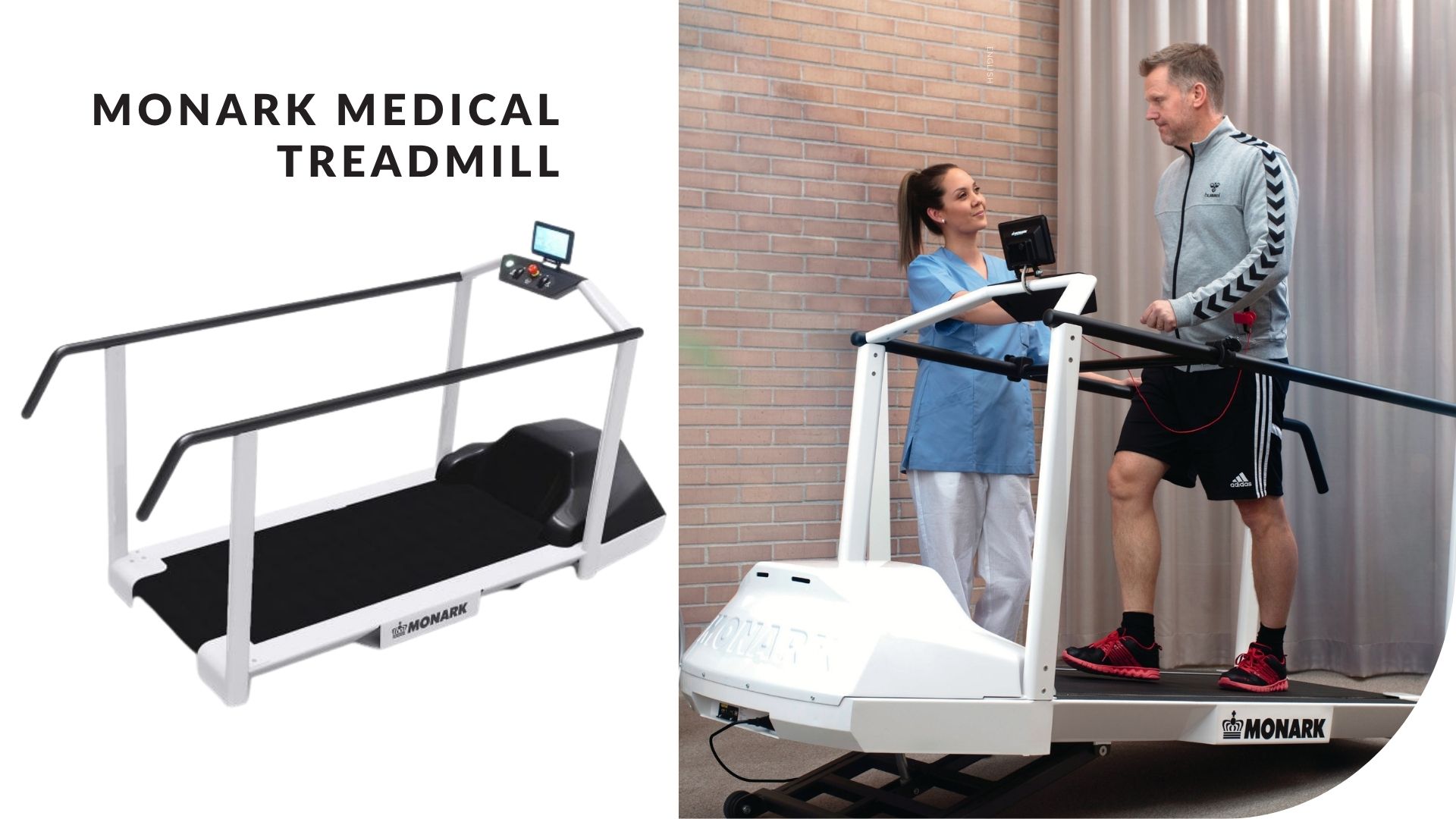
One of the most advanced innovations in modern rehabilitation treadmills is slat-belt (slatted deck) technology, utilized in premium systems such as the Monark Medical Treadmill.
Instead of a single rubber belt, the walking surface is made of individual interconnected slats that move smoothly over precision bearings, creating a more natural and stable walking experience.
Key Advantages of Slat-Belt Design
- Provides a natural walking and running motion similar to ground walking
- Ensures excellent stability and grip, reducing slipping risks
- Delivers smoother movement with minimal belt resistance
- Improves control during slow-speed rehabilitation sessions
- Enhances durability for continuous clinical use
This innovative design is especially beneficial for elderly patients and rehabilitation users, where stability and confidence are critical during movement training.
Shock Absorption: Reducing Stress on Joints and Muscles
Another major advantage of advanced medical treadmills is their integrated shock absorption system, designed to reduce impact forces during walking and running.
Every step creates ground reaction forces that travel through the lower limbs. Traditional treadmill systems can increase strain on joints, whereas slat-belt systems combined with engineered cushioning significantly reduce impact stress.
Benefits of Shock Absorption Technology
- Reduces stress on knees, hips, and ankles
- Minimizes pressure on the lower back and spine
- Lowers the risk of injury aggravation during therapy
- Allows longer and more comfortable rehabilitation sessions
- Supports safer exercise for elderly and post-surgery patients
These benefits make advanced medical treadmills ideal for patients recovering from orthopedic surgeries, fractures, chronic joint conditions, and mobility impairments.
Transforming Cardiac Stress Testing
Cardiac stress testing is one of the most important diagnostic procedures used to evaluate how the heart responds to physical activity. During the test, patients walk on a medical treadmill while clinicians monitor heart rate, blood pressure, ECG signals, and oxygen response.
Precise Workload Control
Modern medical treadmills provide accurate speed and incline adjustments, enabling healthcare professionals to follow standardized cardiac stress testing protocols with exceptional precision.
Enhanced Diagnostic Safety
Features such as emergency stop mechanisms, stable handrails, and controlled acceleration improve patient safety throughout the testing process.
Better Data Accuracy
A stable walking platform reduces unnecessary movement, improving ECG signal quality and overall physiological data reliability.
Revolutionizing Rehabilitation Outcomes
Medical treadmills play a vital role in structured rehabilitation programs across multiple healthcare disciplines.
Cardiac Rehabilitation
Supports gradual exercise progression for patients recovering from heart attacks, cardiac surgery, or cardiovascular disease.
Neurological Rehabilitation
Assists patients recovering from stroke and neurological disorders in regaining balance, coordination, and walking ability.
Orthopedic Rehabilitation
Helps restore mobility after joint replacement surgeries, ligament injuries, fractures, and musculoskeletal conditions.
Pulmonary Rehabilitation
Improves endurance, respiratory efficiency, and exercise tolerance in patients with chronic respiratory diseases.
The combination of smooth slat-belt movement and reduced impact loading contributes to safer and more effective rehabilitation outcomes.
Designed for Patients, Elderly Users, and Clinical Comfort
Modern medical treadmills prioritize patient comfort and safety, making them suitable for vulnerable populations and rehabilitation environments.
- Ultra-smooth belt movement without sudden jerks
- Wide walking surface for enhanced stability
- Low starting speeds for safe initiation
- Ergonomic handrails for balance support
- Controlled acceleration for patient confidence
These features help reduce the fear of falling while encouraging consistent participation in rehabilitation programs.
Why Healthcare Providers Prefer Advanced Medical Treadmills
Healthcare facilities increasingly choose advanced treadmill systems because they offer:
- Reliable and repeatable clinical testing conditions
- Safe rehabilitation environments for all age groups
- Multi-department usability across cardiology, physiotherapy, and sports medicine
- Durable construction for high patient volumes
- Improved patient satisfaction and recovery outcomes
The Future of Medical Treadmill Technology
The next generation of medical treadmills is becoming more intelligent, connected, and data-driven.
- AI-powered performance analysis
- Remote rehabilitation monitoring
- Electronic health record integration
- Personalized exercise prescriptions
- Real-time predictive safety alerts
These innovations will further strengthen the role of medical treadmills in preventive healthcare, rehabilitation, and long-term patient management.
Conclusion
Medical treadmills have become a cornerstone of modern healthcare by enhancing both cardiac stress testing accuracy and rehabilitation effectiveness. Advanced technologies such as slat-belt systems and shock absorption mechanisms significantly improve patient comfort, reduce joint stress, and support safer clinical outcomes.
For patients, especially elderly individuals and those recovering from injury or surgery, these systems provide a stable, low-impact, and confidence-building environment for movement therapy. For clinicians, they offer precision, safety, and reliable diagnostic performance.
As healthcare continues to advance, medical treadmills will remain a critical bridge between diagnosis, treatment, and full physical recovery.
Explore Advanced Medical Treadmill Solutions
MedPrix offers advanced medical treadmill systems designed for cardiac diagnostics, rehabilitation, sports medicine, and clinical research applications. Discover the benefits of the Monark Medical Treadmill and enhance your healthcare facility with clinically proven treadmill technology.